iAspirants
New Aspergillus Species Revealed in India
Published on:
Share this post
Article Summary
Researchers from the MACS-Agharkar Research Institute (ARI) in Pune, part of the Department of Science & Technology, Government of India, have unveiled two new species of Aspergillus section Nigri, namely, Aspergillus dhakephalkarii and Aspergillus patriciawiltshireae. Additionally, the study marked the first geographic records of two other species, A. aculeatinus and A. brunneoviolaceus, from soil samples in the ecologically sensitive Western Ghats region.
Key Highlights:
Species Description:
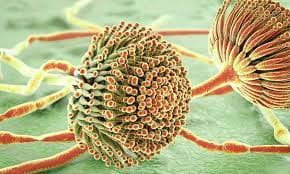
- Aspergillus dhakephalkarii: Characterized by rapid colony growth, pale to dark brown conidia, smooth-walled ellipsoidal conidia, and distinct branching patterns in conidiophores.
- Aspergillus patriciawiltshireae: Fast-growing with yellowish-orange sclerotia, modest sporulation, and echinulate conidia.
Research Significance:
- This study demonstrates a pressing need for ongoing exploration and conservation in the Western Ghats, a hotspot with significant ecological and biotechnological importance.
- Fungi in the genus Aspergillus hold vital roles in medical, industrial, and ecological applications, particularly in fields like fermentation technology and food mycology.
Techniques Employed:
- The research team utilized an integrative or polyphasic taxonomic approach, which combined morphological characterization and molecular phylogenetic analyses.
- Genetic marker analyses included Internal Transcribed Spacer (ITS), Calmodulin (CaM), BenA, and RPB2 genes to authenticate the species and understand phylogenetic relationships.
Findings on Phylogeny:
- Phylogenetic analysis positioned A. dhakephalkarii as closely related to A. saccharolyticus and A. patriciawiltshireae as related to A. indologenus, A. japonicus, and A. uvarum.
Historical Context:
- Previous discoveries of the Nigri section's species in the Western Ghats were conducted by international researchers. This study led by Dr. Rajesh Kumar K. C. transitioned from a project initiated by the National Fungal Culture Collection of India to a detailed examination by ARI, highlighting advancements in the mycological understanding of the region.
Funding and Acknowledgments:
- The research was supported by the Core Funding of MACS ARI and a project grant from the ANRF (previously SERB) under project number YSS/2015/001590.
First Indian Study:
- This research is notably significant as it is the first study in India to implement the advanced integrative taxonomic approaches in the identification of Aspergillus species, amplifying the scientific understanding of the rich fungal diversity in the Western Ghats.
In conclusion, this study not only enriches the taxonomic inventory of Aspergillus species localized within India but also emphasizes the ecological richness of the Western Ghats, highlighting the importance of sustained environmental research and conservation efforts.
Important Points:
- Identification of two new species: A. dhakephalkarii and A. patriciawiltshireae.
- First records of species A. aculeatinus and A. brunneoviolaceus in India.
- Utilized polyphasic taxonomic methods integrating morphology and molecular data.
- Key researchers: Harikrishnan K., Rajesh Kumar K. C., and Ravindra M. Patil from MACS ARI.
- Research underscores the Western Ghats as a vital ecological reservoir.
- Significance for industries such as food mycology and fermentation technology.
- Represents a pioneering Indian academic endeavor in the systematics of Aspergillus species.
Key Terms & Concepts
| Aspergillus section Nigri | studied fungal species |
| Western Ghats | ecologically sensitive hotspot |
| MACS-Agharkar Research Institute | research institute in Pune |
| Department of Science & Technology | government department |
| ITS and CaM | genes for identification |
| BenA and RPB2 | genes for phylogeny |