iAspirants
Paul Ehrlich: Pioneer of Immunology
Published on:
Share this post
Article Summary
Summary of Paul Ehrlich's Contributions to Medicine
Birth and Early Life: Paul Ehrlich was born on March 14, 1854, in Strehlen, Germany, now known as Strzelin in Poland. He was the son of Ismar Ehrlich and Rosa Weigert. Ehrlich was educated in Breslau and studied medicine at various prestigious universities including Breslau, Strassburg, Freiburg-im-Breisgau, and Leipzig.
Academic Formation: He earned his doctorate in medicine in 1878 with research focused on theoretical staining practices. Early in his academic career, Ehrlich displayed scientific curiosity by connecting abstract philosophical ideas to practical applications in biology.
Research and Career Development: Ehrlich’s research transitioned from dyes to immunology, leading him to be an assistant to the renowned bacteriologist Robert Koch at the Institute for Infectious Diseases in Berlin from 1890. His work culminated in significant advances in serum therapies for diseases like diphtheria and tetanus.
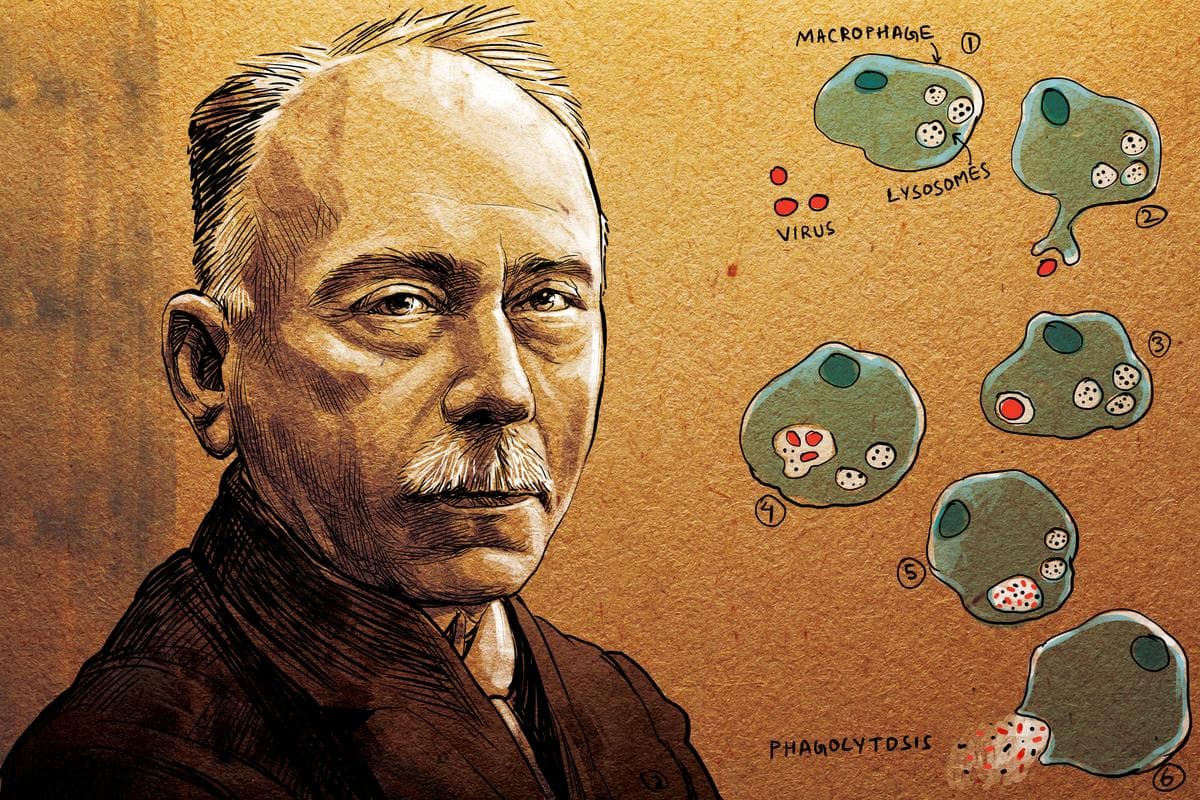
Directorship and Nobel Prize: In 1896, Ehrlich became the director of the Institute for Serum Research and Serum Testing, now known as the Paul-Ehrlich-Institut. He earned the Nobel Prize in Physiology or Medicine in 1908 alongside Elie Metchnikoff for their pioneering work on immunity.
Theories of Immunity: Ehrlich formulated a chemical theory of immunity, which articulated how antitoxins, or antibodies, formed to combat bacterial toxins. His perspective complemented Metchnikoff’s research focused on the role of white blood cells in immune response.
Concept of Chemotherapy: He introduced the concept of "chemotherapy," denoting the use of chemicals to selectively target infectious microbes while preserving human health. This idea has evolved and now mainly describes cancer treatment.
Search for 'Magic Bullets': Ehrlich sought to create "magic bullets," specific chemical agents aimed at eradicating pathogens without harming the host. He characterized this vision as a search for selective, targeted treatments.
Atoxyl and Salvarsan Development: Collaborating with chemist Alfred Bertheim, Ehrlich identified the structural formula of atoxyl, an arsenic compound. Despite atoxyl's toxicity, it became the basis for developing targeted drugs for syphilis.
First Chemotherapy Session: On August 31, 1909, Sahachiro Hata, under Ehrlich's guidance, injected compound 606 (later known as Salvarsan) into a rabbit infected with syphilis. This experiment marked the inception of chemotherapy, demonstrating remarkable efficacy in treating syphilis.
Commercialization and Acceptance: Salvarsan was effectively marketed and demonstrated high potency, especially at early disease stages. It became one of the first acknowledged treatments for syphilis, leading to a significant decline in the disease's prevalence until superseded by antibiotics in the 1940s.
Further Innovations: Ehrlich’s perseverance led to subsequent developments like Neosalvarsan, created from modifications to compound 606. Neosalvarsan offered an easier manufacturing process and bolstered treatment options despite being less effective than Salvarsan.
Final Years and Legacy: The turmoil of World War I affected Ehrlich's well-being. After suffering a stroke and continued health decline, he passed away in August 1915. His contributions to medicine were nationally recognized, with the obituary in The London Times declaring, “The whole world is in his debt,” reflecting his remarkable impact on modern medical science.
This summary encapsulates the life and work of Paul Ehrlich, recognizing his groundbreaking research in immunology and chemotherapy, leading to significant advancements in the treatment of infectious diseases.
Important Bullet Points:
- Paul Ehrlich was born on March 14, 1854, in Strehlen, Germany.
- He received his doctorate in medicine in 1878 and transitioned his focus towards immunology.
- Worked under Robert Koch and became director of the Institute for Serum Research and Serum Testing in 1896.
- Awarded the Nobel Prize in Physiology or Medicine in 1908 with Elie Metchnikoff.
- Developed the chemical theory of immunity and introduced the concept of chemotherapy.
- Sought to create "magic bullets" for targeted treatment of infectious diseases.
- Conducted the first session of chemotherapy with compound 606 on August 31, 1909.
- Salvarsan and Neosalvarsan became accepted treatments for syphilis until the advent of antibiotics in the 1940s.
- Passed away in August 1915, leaving a profound legacy in the field of medicine.
Key Terms & Concepts
| Institute for Infectious Diseases | Research facility in Berlin |
| Nobel Prize in Physiology | Honor for scientific achievement |
| Serum Research and Serum Testing | Institute directed by Ehrlich |
| Salvarsan | First magic bullet drug |
| Neosalvarsan | Modified treatment for syphilis |
| Diphtheria antitoxin | Treatment developed by Ehrlich |
| Atoxyl | Starting compound for drug synthesis |