iAspirants
Supreme Court Reviews Rural Employment Scheme
Published on:
Source: The Hindu
Share this post
Article Summary
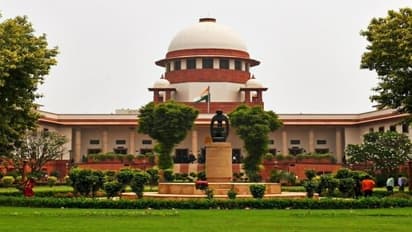
Supreme Court Ruling on Employment Guarantee Schemes
Key Points:
Supreme Court Remarks on MGNREGA:
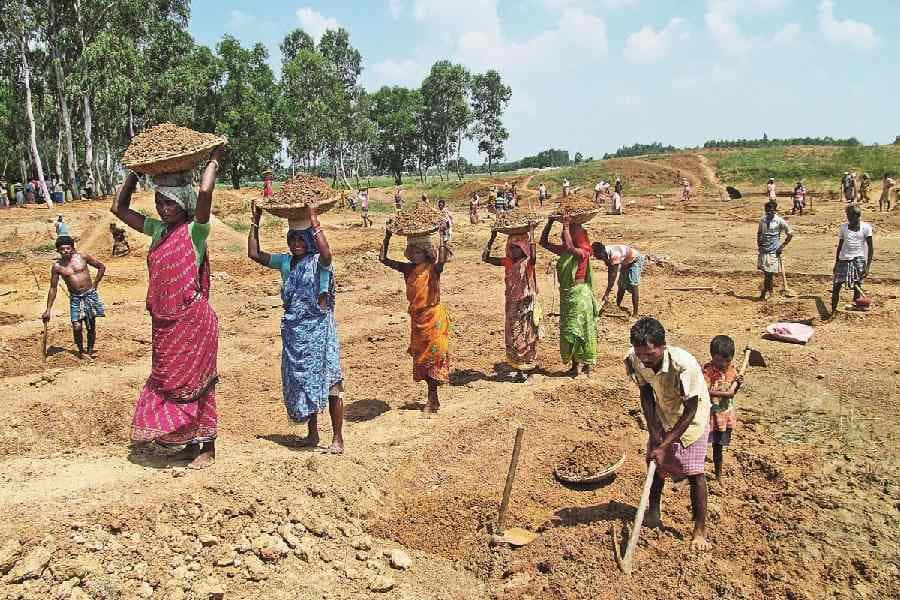
- The Supreme Court praised the Mahatma Gandhi National Rural Employment Guarantee Act (MGNREGA) as a “salutary scheme” that effectively supported rural employment.
- Chief Justice Surya Kant emphasized that MGNREGA was neither a "freebie" nor an exploitation of rural workers.
VB-G RAM G Act Concerns:
- The successor to MGNREGA, the Viksit Bharat Guarantee for Rozgar and Ajeevika Mission (Gramin) or VB-G RAM G Act, reportedly led to a 50% decline in employment generation.
- Despite an increase in guaranteed work days from 100 to 125 days per household annually, the effectiveness of the new scheme is questioned.
- The funding burden on states increased significantly, changing from a 90:10 to a 60:40 ratio.
Legal Proceedings:
- The court was hearing a petition from activist Aruna Roy regarding delayed wages under MGNREGA and the possibility of establishing a minimum wage as a fundamental right.
- The petition argued for elevating the statutory guarantee of rural work to a fundamental right under Article 21 of the Indian Constitution (Right to Life).
Constitutional Context:
- Article 21: Provides the Right to Life, which includes the right to live with dignity.
- Part IV: Directive Principles of State Policy, which includes the aspiration for the state to provide work.
- The court noted that while the right to work is an aspiration, it is not explicitly a fundamental right under the Constitution.
Judicial Opinions:
- Justice Joymalya Bagchi questioned if minimum wage laws could be aligned with the existing legal framework without risking employment opportunities.
- Chief Justice Kant noted the importance of local conditions in determining wage levels.
- Justice V. Mohana emphasized the need for fresh analysis and data under the new law rather than relying on MGNREGA metrics.
Funding and Employment Issues:
- Advocates highlighted that states were expected to provide nearly half of the funding under the new VB-G RAM G Act while facing budget constraints.
- Concerns were raised about the reduction in employment opportunities and financial viability for states.
Next Steps:
- The court instructed Mr. Bhushan to file a new petition addressing the issues raised in light of the VB-G RAM G Act.
Conclusion:
The Supreme Court's ruling and discussions reflect a critical examination of employment guarantee schemes in India, highlighting the constitutional implications of labor rights and the challenges posed by changing government policies. The shift from MGNREGA to VB-G RAM G Act raises significant questions about employment generation, state funding, and the legal categorization of the right to work.
Key Terms & Concepts
| Mahatma Gandhi National Rural Employment Guarantee Act | Previous rural employment scheme |
| Viksit Bharat Guarantee for Rozgar and Ajeevika Mission | Successor to MGNREGA |
| 125 work days | Increased work days per household |
| 60:40 funding ratio | New funding burden on States |
| Article 21 | Right to life in Constitution |
| Part IV (Directive Principles of State Policy) | Guiding principles for policy |
| 50% decline in employment generation | Statistic indicating employment issues |