iAspirants
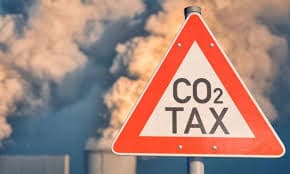
EU Implements Carbon Tax on Imports
Published on:
Share this post
Article Summary
Key Highlights on the EU's Carbon Border Adjustment Mechanism (CBAM)
Overview:
- Implementation Date: January 1, 2023
- Objective: Imposes a tax on carbon-intensive goods from countries with lower environmental regulations entering the EU.
- Primary Sectors Affected: Power sector; energy-intensive industries such as cement, steel, aluminium, oil refineries, paper, glass, chemicals, and fertilizers.
International Reactions:
- Developing Nations Concern: Countries like India have expressed fears that CBAM could hinder export-led development, particularly for poorer nations.
- Common But Differentiated Responsibilities (CBDR): CBAM is seen as in violation of this principle, established in international environmental law and recognized by the WTO, emphasizing differentiated obligations based on development status.
Trade Implications:
- Impact on Indian Exports: India mainly exports aluminium, iron, and steel to the EU, which could face increased costs due to CBAM.
- Compliance Costs: Indian exporters may have to reduce prices by 15-22% to accommodate the additional carbon tax, potentially pushing many smaller exporters out of the EU market due to high compliance costs.
Legislative Context:
- Concerns Raised by UNCTAD: The UN Conference on Trade and Development estimated that CBAM could reduce global CO2 emissions by only 0.1% while significantly impacting exports from developing countries.
- Finance Minister’s Position: Nirmala Sitharaman described CBAM as unilateral and a trade barrier for Indian industry, asserting that such measures do not adequately support investment in energy transitions.
Government Response:
- Support for Compliance: Indian exporters are seeking government assistance for transitioning to cleaner production methods, such as using arc furnaces instead of traditional blast furnaces.
- Trade Negotiations: There are ongoing discussions regarding a carve-out for Medium and Small Enterprises (MSMEs) during India-EU trade negotiations, though the EU insists CBAM is not negotiable.
Industry Adjustments:
- Shift to Cleaner Technologies: Manufacturers in India need to invest in electric arc furnaces (EAFs) for steel production, which are cleaner but underutilized in India compared to blast furnaces.
- Data Verification Challenges: MSMEs struggle to access accurate emissions data from larger manufacturers, risking penalties under CBAM if default emissions values (typically higher) are applied.
Conclusion:
Overall, the implementation of the CBAM represents a significant regulatory shift impacting Indian exports, especially in the steel and aluminium sectors. This development highlights the tension between environmental regulations and trade practices, particularly in the context of global inequalities between developed and developing nations. As the situation evolves, ongoing negotiations and international dialogues will be crucial in addressing the concerns raised by affected countries.
Key Terms & Concepts
| European Union | Imposing carbon tax on imports |
| carbon border adjustment mechanism (CBAM) | New trade-environment measure |
| Common But Differentiated Responsibilities (CBDR) | Principle in international law |
| United Nations Conference on Trade and Development (UNCTAD) | Warning on development impact |
| January 1, 2026 | Implementation date for carbon costs |
| 15-22% | Expected price cut for exporters |
| arc furnaces | Cleaner method for iron production |
| blast furnaces | Common production method in India |
| steel scrap | Regulated export from India |
| MSMEs (Micro, Small, and Medium Enterprises) | Most affected by compliance costs |
| 2021 UNCTAD Study | Estimated CBAM impact on emissions |
| EU deforestation law | Related trade barrier for India |