iAspirants
Global Order Reshaped by Alliances
Published on:
Share this post
Article Summary
The article discusses the dynamics of global power shifts and geopolitical alignments as evidenced during the recent Shanghai Cooperation Organisation (SCO) summit held from August 31 to September 1, 2024. The summit was attended by notable leaders including Indian Prime Minister Narendra Modi and Russian President Vladimir Putin, with Chinese President Xi Jinping advocating for a “multipolar” world order that challenges the dominance of the United States (US).
Key Points from the Article:
Multipolar World Advocacy: Xi Jinping’s remarks emphasized the need for a multipolar world, critiquing the imposition of rules by a select few nations—primarily aimed at defending China's position against US hegemony.
Military Parade and Geopolitical Alignments: China plans to showcase a military parade featuring countries like Russia, North Korea, and Iran—often labeled as anti-West—highlighting the unofficial alliance termed the “axis of upheaval”.
Axis of Upheaval Definition: Coined in 2024 by analysts Andrea Kendall-Taylor and Richard Fontaine, the “axis of upheaval” refers to a group of nations including China, Russia, Iran, and North Korea, which have converged to counter the prevailing US-centric international order.
Collective Objectives: The primary objective of this alliance appears to be the dissolution of Western-dominated international principles, aiming instead to establish an alternative order through deepening their military, economic, and political ties.
Recent Developments: The term gained traction, leading to discussions at NATO forums. Security experts are increasingly concerned over the shared military capabilities and evolving partnerships within this grouping.
Internal Dynamics: Despite a shared anti-Western sentiment, internal conflicts exist among the nations in this nexus. For example, while Russia and China have strengthened ties post-2014 annexation of Crimea, their relationship remains complicated due to past rivalries.
Economic Interdependencies:
- Iran relies heavily on China for oil imports (around 90%) amidst Western sanctions and has been reported to supply Russia with military equipment like drones.
- North Korea has turned to Russia for military support during the Ukraine conflict, straining its historically significant ties with China.
India’s Position:
- Prime Minister Modi’s engagement with Xi and Putin at the SCO was significant, marking his first visit to China in seven years. India has maintained a cautious stance with these countries while resisting their anti-Western rhetoric.
- India’s recent tariffs against US interests have strained bilateral relations, leading to adaptation in India's foreign policy towards strengthening ties with nations like Japan.
Engagement with the West: Despite its relationships with China, Russia, and Iran, India continues to uphold dialogue with the US, balancing its national interests amid US-imposed tariffs on Indian imports, particularly related to Russian oil.
Future Implications: India faces the dual challenge of preserving its sovereignty and maintain economic partnerships with both Western and Eastern blocs. The US's stance against specific countries, including India, is also viewed through the lens of domestic political dynamics, particularly concerning tariff policies.
In conclusion, the article underlines a significant shift in global power relations, reflecting a fragmented international order where traditional alliances are being revisited and new coalitions formed amidst escalating tensions, particularly between Western nations and a coalition of non-Western states.
Important Sentences:
- The SCO summit illustrated global power shifts, particularly with Xi’s call for a multipolar world.
- The “axis of upheaval” includes China, Russia, Iran, and North Korea, seeking to overturn US hegemony.
- Internal conflicts exist within these nations, complicating their path toward a unified geopolitical stance.
- India’s strategic balancing act continues as it engages with both Western and Eastern powers while responding to tariff challenges from the US.
Key Terms & Concepts
| Shanghai Cooperation Organisation | International summit for cooperation |
| Chinese President Xi Jinping | Champion for multipolar world |
| United States | Dominant global power |
| Russia | Member of 'axis of upheaval' |
| North Korea | Member of 'axis of upheaval' |
| Iran | Member of 'axis of upheaval' |
| NATO | Military alliance concerned with threats |
| India | Engaging with multiple powers |
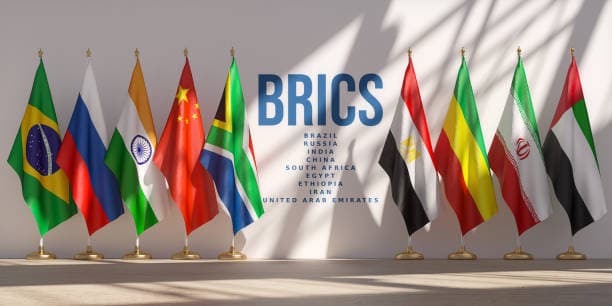
| BRICS | Group inclusive of key nations |
| Economic sanctions | Used against adversaries |