iAspirants
Macron Unites Allies for Ukraine Support
Published on:
Share this post
Article Summary
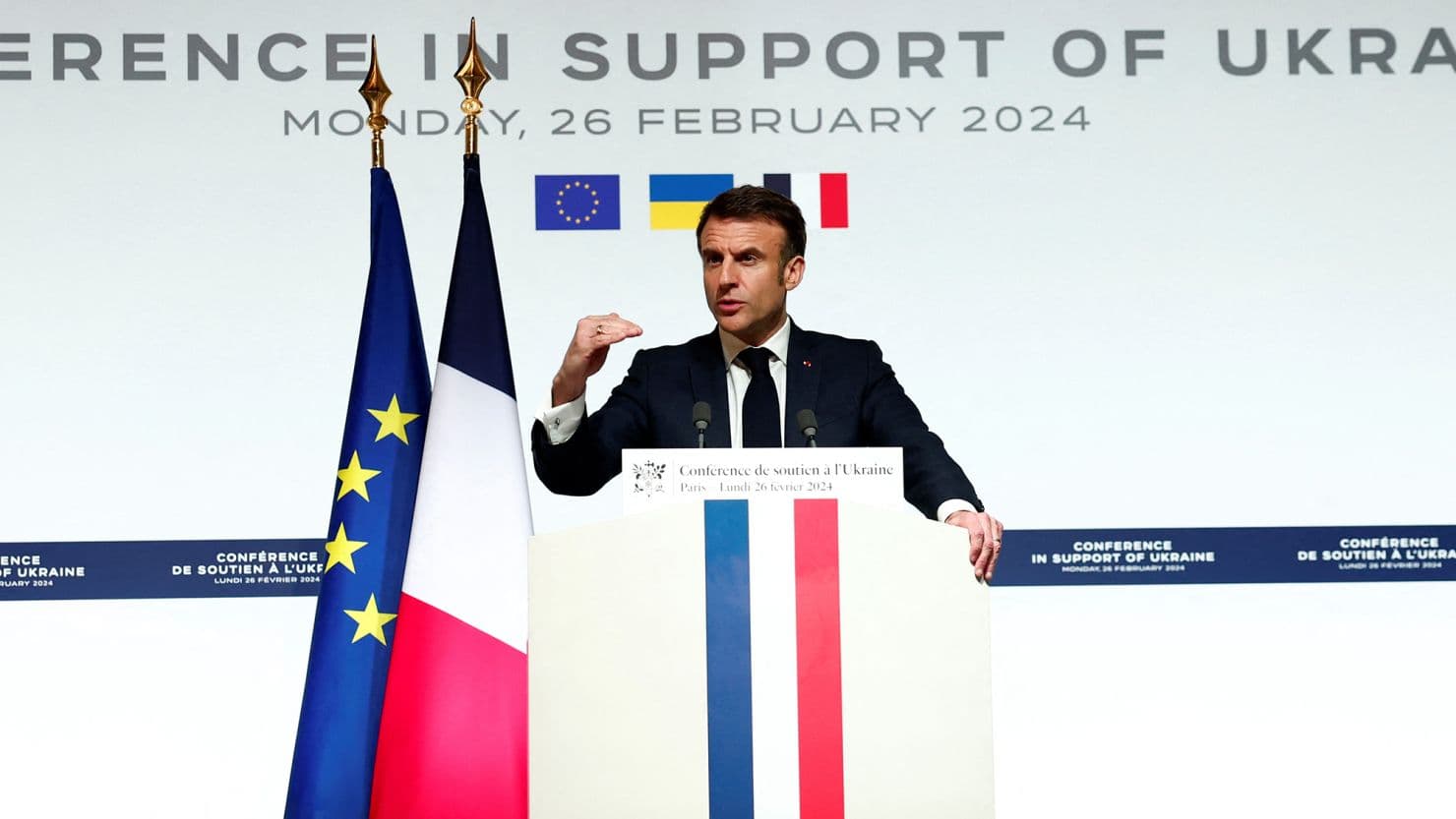
On September 4, 2025, French President Emmanuel Macron announced that 26 allied countries have committed to deploying troops as a "reassurance force" for Ukraine once hostilities cease in the ongoing conflict with Russia. This declaration follows a meeting of a coalition of European leaders in Paris, where they discussed measures for enduring military support for Ukraine and ensuring American backing after the conflict’s resolution.
Key highlights from the meeting include:
Troop Commitment: Macron stated that allies would maintain a military presence—on land, in the air, or at sea—once a ceasefire is achieved, aimed at guaranteeing Ukraine's security.
Discussion with Ukrainian Officials: Macron and other European leaders met with Ukrainian President Volodymyr Zelenskyy and U.S. peace envoy Steve Witkoff, focusing on long-term support and security guarantees akin to NATO's collective defense principles.
Russian Accountability: European leaders called for Russia to expedite peace negotiations, with German Chancellor Friedrich Merz suggesting enhanced sanctions on Russia if the conflict prolongs.
Military Supply Commitments: The coalition decided to provide long-range missiles to Ukraine, strengthening its military supplies against ongoing aggression.
Cybersecurity and Defense Guarantees: Zelenskyy's chief of staff emphasized the importance of robust security guarantees across various dimensions, including air, land, sea, and cyber domains.
U.S. Involvement: Prime Minister Keir Starmer highlighted that any reassurance force requires U.S. support, pointing to strong commitments from President Donald Trump for continued backing of Ukraine.
Future Diplomatic Efforts: Merz proposed a summit to discuss a ceasefire, suggesting that if negotiations stall, Europe would escalate sanctions on Russia to galvanize a diplomatic solution.
NATO's Role: NATO Secretary-General Mark Rutte, who attended virtually, underscored the necessity of a broad coalition to support Ukraine’s defense and to deter further Russian military actions in Europe.
Russian Actions: On the same day, the Ukrainian Air Force reported that Russia launched 112 strike and decoy drones, with Ukrainian defenses managing to intercept or jam 84 of them.
Diplomatic Tensions: Concurrently, Russia expelled an Estonian diplomat following Estonia's previous declaration of a Russian diplomat as persona non grata, highlighting ongoing tensions in the region.
This development underscores the allies' resolve to support Ukraine in the face of continued Russian aggression, while also focusing on the potential for future diplomatic resolutions.
Important Bullet Points:
- 26 allies to deploy troops as a "reassurance force" for Ukraine post-conflict.
- Meeting involved discussions on long-term military support and security guarantees.
- European sanctions on Russia may increase if it does not engage in peace talks.
- Decision made to supply long-range missiles to Ukraine.
- Emphasis on strong security guarantees across all dimensions (land, air, sea, cyberspace).
- U.S. involvement deemed crucial for any reassurance force.
- Proposed summit for ceasefire discussions by German Chancellor.
- Russian aggression indicated by drone strikes; Ukraine's defenses remained effective.
- Diplomatic tensions observed with Russia expelling an Estonian diplomat.
Key Terms & Concepts
| Ukraine | Country receiving military support |
| Russia | Aggressor in the conflict |
| European Union | Coalition of supporting nations |
| NATO | Military alliance for defense |
| U.S. | Key supporter of Ukraine |
| Germany | Suggests sanctions on Russia |
| Estonia | Involved in diplomatic tensions |