iAspirants
Protests and Electoral Integrity Demands
Published on:
Share this post

Article Summary
Summary of Key Points from Protests in Delhi
Constitutional and Legal Context
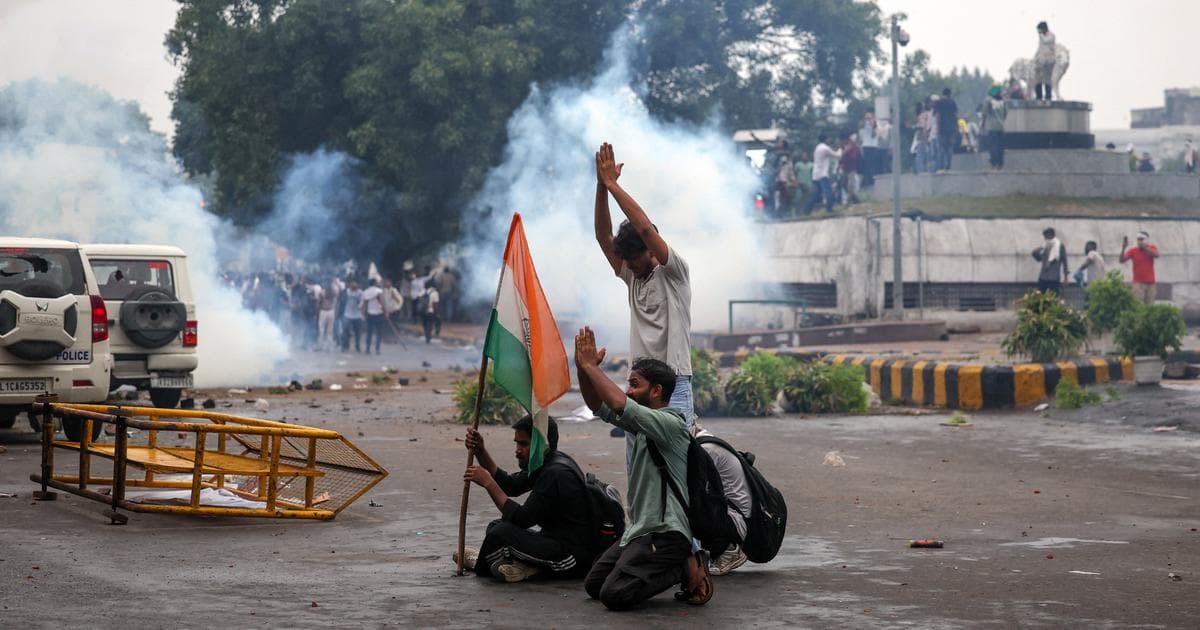
- Fundamental Rights: The right to peaceful protest is enshrined as a fundamental right under Article 19 of the Constitution of India.
- Election Commission of India (ECI): The independent statutory authority under Article 324 that administers election processes.
Main Issues and Demands of Protesters
Resignation/Impeachment of CEC Gyanesh Kumar:
- This demand aims at restoring credibility and functioning of the Election Commission.
Rollback of the SIR (Systematic Electoral Reform):
- The SIR is viewed as causing the largest disenfranchisement in Indian electoral history.
Repeal of the 2023 Act:
- This Act grants the ruling regime extensive powers to appoint members to the ECI and provides them with immunity from accountability.
Political Dynamics and Strategy
- Nature of Protests: Characterized as "redemocratisation" aimed at combating "democracy capture" post-2014, where democratic means are allegedly used to consolidate power.
- Strategy for Future Protests:
- Emphasis on spatial and social expansion of protests.
- Development of new forms of action beyond street demonstrations.
Institutional and Political Landscape
- Consultative Push: Calls for various groups (CJP, INDIA bloc, youth organizations) to align efforts without conflicting agendas.
- Protest Characteristics: The protests are described as "spontaneous synchronisation," which indicates collective action arising organically without centralized leadership.
Social and Electoral Implications
- Restoration of Electoral Integrity: The ultimate goal is to ensure free and fair elections, ensuring the possibility of a peaceful transfer of power.
- Potential for Regime Change: While currently focused on restoring electoral integrity, there is a caution that prolonged frustration might lead to demands for regime change.
Conclusion
- Popular Mobilization: Street protests serve as countervailing pressure against the ruling regime, hoping to strengthen institutions.
- Youth Engagement: Young protesters' involvement is critical, as they are less tied to political affiliations and prefer a citizens' movement supported by political parties.
This overview highlights the protest's constitutional basis, core demands, plans for future actions, the significance of electoral integrity, and the involvement of youth and citizens in mobilizing for democratic principles.
Key Terms & Concepts
| Chief Election Commissioner | Leadership in electoral integrity |
| SIR | Policy causing disenfranchisement |
| 2023 Act | Grants powers to ECI appointments |
| BJP | Political party in power |
| Supreme Court | Judicial authority referenced |
| democracy capture | Concept affecting electoral fairness |
| Electoral Commission of India | Regulatory body for elections |
| 2014 elections | Reference for integrity concerns |