iAspirants
Trump's Controversial UN Climate Address
Published on:
Share this post
Article Summary
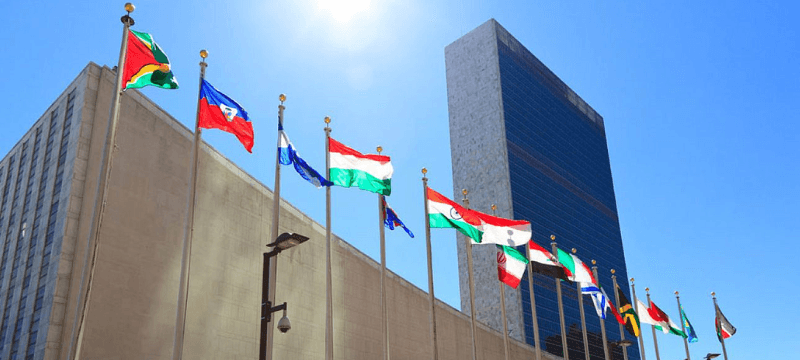
UNGA Address: President Donald Trump discussed climate change at the United Nations General Assembly, claiming it is a "greatest con job" and criticizing Europe's efforts to reduce carbon footprints.
Critique of Science: Trump dismissed decades of scientific evidence, mischaracterizing climate science, and suggesting that shifts in climate terminology reflect dishonesty among scientists.
Temperature Changes: Reference to historical temperature shifts: a 0.1°C global temperature dip attributed to increased sulphur emissions due to coal burning (1945-1970).
Climate Organizations: The Intergovernmental Panel on Climate Change (IPCC) has been crucial since the 1990s for providing scientific insights on climate variation, distinguishing natural from human-induced changes.
Impact on Fossil Fuels: Trump suggested that advancements in solar and wind energy are indicative of countries approaching destruction under a "green agenda," revealing tensions between environmental policies and the fossil fuel industry.
Multilateral Climate Processes: Acknowledgment of legitimate critiques regarding the effectiveness and fairness of the international climate action framework and the balance between climate justice and trade protectionism.
Scientific Consensus: Despite criticisms, it is noted that the scientific community is progressively moving towards a post-fossil-fuel future, supported by rigorous evidence and methodologies.
Overall Implication: The discourse indicates a significant divide between scientific understanding of climate change and political rhetoric, raising concerns over future climate policies and global cooperation.
Key Terms & Concepts
| United Nations General Assembly (UNGA) | International platform for dialogue |
| Intergovernmental Panel on Climate Change | Scientific assessment body for climate change |
| global temperature dip of 0.1°C | Reported temperature change statistic |
| solar and wind energy | Renewable energy sources adoption |
| fossil fuel industry | Economic sector affected by policies |
| climate change | Environmental phenomenon discussed |
| post-fossil-fuel future | Future goal for energy transition |