iAspirants
Current AffairsPrelims PYQsUPSC CSE SyllabusUPSC CSE StrategyBlogsPricing
Login
iAspirants

Your AI-powered companion for UPSC preparation.

Quick Links

  • Home
  • About Us
  • Current Affairs
  • Prelims PYQs
  • UPSC CSE Syllabus
  • UPSC CSE Strategy
  • Blogs

Company

  • Pricing
  • FAQs
  • Contact Us
  • Login

Legal

  • Privacy Policy
  • Terms & Conditions
  • Return Policy

© 2025 iAspirants, Inc. All rights reserved.

  1. Blogs
  2. Polity and Governance

Code of Ethics for Digital News

Published on: 02-Oct-2026

Source: Indian Express

Share this post

Code of Ethics for Digital News

Article Summary

Digital News Publishers Association: Code of Ethics Summary

Objective of the Code:

  • Establish high ethical standards and practices in digital news publishing.
  • Ensure editorial independence for publishers, while protecting Constitutionally protected freedoms, particularly Article 19(1)(a) (freedom of speech and expression).

Key Components of the Code:

  1. Legal Compliance:

    • Adherence to the Constitution of India and over 30 laws related to media, including provisions from the Indian Penal Code (IPC), Criminal Procedure Code (CrPC), and the Information Technology Act, 2000.
  2. Journalistic Standards:

    • Commitment to accuracy, transparency, and fairness.
    • Mandatory pre-publication verification of news content to avoid defamation and misinformation.
  3. Right of Reply:

    • Obligation to include comments from individuals or parties mentioned in news reports. Should updates be requested, they must be incorporated, with publication dates displayed.
  4. Content Management:

    • Protocol for the correction or removal of false or inaccurate information upon request from concerned parties, including the entire deletion of erroneous articles.
  5. Intellectual Property Rights:

    • Respect for copyright laws, requiring prior permission for the use of protected material, including text and images.
  6. Responsible Reporting:

    • Sensational reporting, particularly on crime and sensitive issues, must be factual and unbiased, maintaining the presumption of innocence.
    • Care in handling reports on sexual harassment, child abuse, and other sensitive matters must adhere to Sections 67, 67A, and 67B of the Information Technology Act, 2000.
  7. Grievance Redressal Mechanism:

    • Compliance with the grievance process laid out in the Information Technology Act, including the appointment of a grievance officer responsible for addressing complaints promptly (within 36 hours of receipt).
  8. Training and Awareness:

    • Regular training programs for editorial staff on relevant laws such as the Right to Information Act, Copyright Act, and provisions regarding reporting on sensitive topics.
    • Special considerations on privacy when reporting cases involving minors and sensitive communal issues.
    • Ensuring accuracy in reporting judicial matters, with balanced coverage of victim and accused narratives.

Conclusion: The Code emphasizes responsible digital journalism aligned with legal frameworks, ethical standards, and sensitivity to the societal impact of news reporting.

Key Terms & Concepts

Constitution of IndiaEnsures freedom of press
Information Technology Act, 2000Regulates digital content
Indian Penal Code (IPC)Governs criminal offenses
Criminal Procedure Code (CrPC)Outlines legal process
Information Technology (Intermediary Guidelines) Rules, 2011Sets guidelines for intermediaries
The Indecent Representation of Women (Prohibition) ActProtects women's representation
Copyright ActProtects intellectual property
Right to Information ActPromotes transparency
POCSO ActProtects children from abuse
Sections 67, 67A and 67B of IT ActPenalties for obscene material
Grievance Redressal MechanismHandles complaints effectively

Mind Map for UPSC Civil Services Revision

Turn UPSC Civil Services Current Affairs Into Exam-Ready Notes

Reading Polity and Governance current affairs is half the work. Revise them with ready-made notes and test what actually stuck.

  • Daily UPSC Civil Services current affairs analysis
  • Revision notes, mind maps & MCQs
  • Prelims mock tests with instant results

Related UPSC Civil Services Current Affairs Articles

Debate Over National Song Laws
Polity and Governance02-Oct-2026

Debate Over National Song Laws

Exam-Focused Notes on National Song 'Vande Mataram' Legislation and Judicial Context

Constitutional & Legal Aspects

  • Prevention of Insults to National Honour Act, 1971: Recently amended to incorporate 'Vande Mataram' as a song under criminal law.
  • Supreme Court Case: T.M. Krishna challenged the amendments; the court is set to review the implications of forcing adherence to the song. Justice Bagchi cited the ruling, asserting that a conscientious objector should not face criminal consequences for refraining from singing.
Bijoe Emmanuel vs. State of Kerala

Key Legal Points

  • Right to Dissent: The court emphasized that the state can decide the official version of the song, but individual rights to religious freedom and peaceful objection must be respected.
  • Judicial Precedents & Interpretations: Justice Bagchi’s comments underscore that the law must protect individual liberties while balancing national sentiments.

Historical Background of 'Vande Mataram'

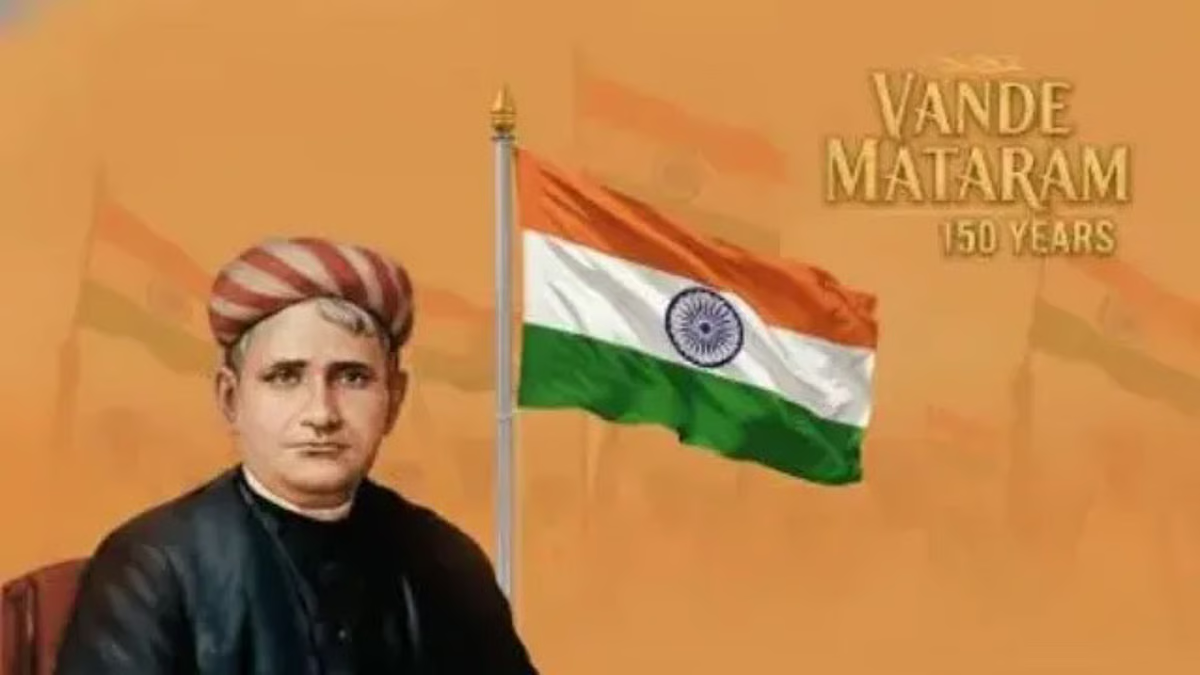
  • Written by Bankim Chandra Chatterjee around 1875, the song celebrates India's landscape and cultural identity.
  • The first two stanzas are acknowledged as universally representative of the motherland, whereas later stanzas invoke specific Hindu deities.
  • The Indian National Congress in 1937 adopted only the first two stanzas amid communal sensitivities, a decision endorsed by key leaders like Rajendra Prasad and Vallabhbhai Patel.

Recent Developments

  • In January 2026, the Home Ministry ordered that all six stanzas be sung at official functions, requiring attendees to stand at attention.
  • The second order in July 2026 officially designated the six-stanza version as the National Song, placing it ahead of the National Anthem.

Judicial and Public Reactions

  • The Supreme Court is yet to make a decisive ruling but is reviewing the balance between national identity and individual rights, as highlighted by public debates.
  • The Solicitor General’s response highlighted concerns about associating dissent with extremist ideologies.

National Sentiments and Suggestions

  • Proposal for 'Vaishnava Jana To': Suggested as India's National Prayer, indicating a more inclusive approach to national identity without compulsory singing or penalties.
  • The argument emphasizes that genuine national sentiments cannot be legislated or enforced through coercion.

Economic and Demographic Context

  • India's population stands at 1.4 billion, prompting discussions about the essence of national identity versus compulsory expressions.
  • Inclusion Over Compulsion: The narrative advocates for a national culture that thrives on understanding and empathy rather than enforced adherence to symbols.

Summary of Views

  • 'Vande Mataram' tests allegiance to the nation, while 'Vaishnava Jana To' is centered on moral conduct and mutual respect.
  • The constitutional ideals promote equal treatment and respect for diverse expressions of citizenship.

Conclusion

Discussions surrounding 'Vande Mataram' and its legislative context encapsulate a broader dialogue about nationalism, individual rights, and respect for diverse cultural expressions in a pluralistic society. The ongoing judicial scrutiny reflects the need for a balanced approach to national symbols that honors both collective identity and personal freedoms.

Gandhi's Advocacy for Universal Voting Rights
Polity and Governance02-Oct-2026

Gandhi's Advocacy for Universal Voting Rights

Summary Notes: Mohandas Gandhi and the Right to Vote

  1. Historical Context:

    • Mohandas Gandhi's first political battle was for the right to vote during his time in South Africa against colonial disenfranchisement.
    • In July 1894, the Natal government proposed the disenfranchisement of Indians, which Gandhi challenged by petitioning Lord Ripon, emphasizing the loss of self-respect for Indians without voting rights.
  2. Gandhi's Advocacy for Universal Adult Franchise:

    • During the 1920s, Gandhi communicated through publications such as Young India and Harijan, asserting that universal adult franchise should be immediate, compelling the powerful to listen.
    • He advocated for voting rights for all individuals regardless of wealth, education, gender, or caste, demonstrated at the 1931 Round Table Conference.
  3. Manipulation of Voter Lists:

    • Gandhi recounted an incident from 1896 in Durban where his name was included in electoral rolls without consent, highlighting issues of electoral integrity and manipulation.
  4. Constitutional Framework:

    • India adopted universal adult franchise at the Republic’s founding in 1950, inspired by Gandhi's advocacy.
    • The sanctity of voting as a constitutional right is emphasized, contrasting the current situation where voter lists are manipulated, resulting in disenfranchisement.
  5. Critique of Current Voting System:

    • The ongoing SIR (specific mention of a current controversy) threatens to mock the constitutional rights of citizens by potentially reducing the electorate through improper revisions of voter rolls.
    • Gandhi’s three tests for fair voting procedures are reiterated:
      • Does revision increase or diminish citizen self-respect?
      • Is the voter roll prepared impartially or favoring certain candidates?
      • Is the vote viewed as a protected right or a granted privilege?
  6. Judicial and Ethical Considerations:

    • The practice of mass disenfranchisement is labeled as "civicide" and "disfranchiside," pointing to deliberate actions to erode citizen rights.
  7. Significance of Gandhi Jayanti:

    • Gandhi Jayanti serves as a reminder of the values Gandhi stood for regarding voting and democratic participation, emphasizing the importance of each name on an electoral list as a fundamental right.
  8. Conclusion:

    • Highlighting the importance of citizen rights and the ethical responsibility of the state's administrative machinery to uphold the law and constitutional provisions in electoral processes, reflecting Gandhi's enduring legacy on the right to vote.
Bihar Forest Department Road MoU
Polity and Governance01-Oct-2026

Bihar Forest Department Road MoU

  • Memorandum of Understanding (MoU): Signed on September 26, 2026, between the Bihar Forest Department and the Road Construction Department (RCD) for the widening of a 10.5-kilometer stretch of National Highway 333.

  • Project Details:

    • The project involves upgrading a single-lane road to a two-lane carriageway through the Gangata forest in Munger district.
    • The revised project cost is ₹51 crore.
  • Forest Clearance:

    • The project requires 2.1 hectares of forest land from the Bhimband Wildlife Sanctuary.
    • Forest clearance application was sought in April 2023; wildlife clearance is pending as of February 2024.
    • The current status of forest clearance is “Pending at State” on the Environment Ministry’s Parivesh portal.
  • Roles & Responsibilities:

    • The MoU assigns the forest department a dual role of facilitating the road project while securing required forest clearances, raising concerns about potential conflict of interest.
    • Clause 4.2 mandates the forest department to cooperate in obtaining necessary approvals while Clause 4.3 requires the availability of forest land for the project.
    • The Divisional Forest Officer (DFO) of Munger will act as the Drawing and Disbursing Officer, overseeing financial aspects related to the project.
  • Execution and Oversight:

    • The RCD retains overall engineering, procurement, and tendering processes, while forest personnel will assist in construction supervision.
  • Objectives of the Project: Enhanced connectivity, improved road safety, and better traffic movement along NH-333.

  • Legal and Ethical Concerns:

    • HoFF Arvinder Singh indicated that the MoU might be withdrawn, hinting at potential issues regarding the forest department's accountability in performing both project delivery and clearance scrutiny.

This agreement showcases the intersection of infrastructure development and environmental conservation, with significant implications for forest governance and regulatory compliance in Bihar.

Bulk Deletion of Voter Names Incident
Polity and Governance01-Oct-2026

Bulk Deletion of Voter Names Incident

  • Incident Summary: Allegations arose in Belagavi North Assembly constituency regarding the systematic targeting and attempt to delete names of Muslim voters from electoral rolls through manipulation of Form-7 applications.

  • Details of the Incident:

    • Location: Veerabhadra Urdu Model School and Government Kannada Higher Primary School, Belagavi.
    • Actors Involved: Two unidentified men posed as officials from the Belagavi City Corporation and allegedly brought bulk Form-7 applications.
    • Nature of Applications: Pre-filled applications sought deletion of names of Muslims, with objectors’ details either handwritten or left blank.
    • Election Officials’ Response: Booth Level Officers (BLOs) refused to sign the applications as they recognized the voters involved; one BLO reported receiving a phone call from someone impersonating the Electoral Registration Officer (ERO), Udayakumar Basavantappa Talawar, pressuring them to comply.
  • Constitutional Reference: The right to vote is safeguarded under Articles 326 and 328 of the Indian Constitution, ensuring free and fair elections.

Ecosystem for Innovation in Bharat
Polity and Governance01-Oct-2026

Ecosystem for Innovation in Bharat

Key Points on India's Intellectual Property Rights and Legal System Enhancement

Patent Regime and IP Evolution

  • Amendments to Patents Act, 1970:
    • Last major amendment in 2005 introduced product patents for chemical substances.
    • Key sectors impacted: Pharmaceuticals, Biotechnology, Agro-chemicals.
  • Intellectual Property (IP) Creation and Enforcement:
    • Significant increase in awareness and interest post-2005 amendment.
    • Expands to trademarks, copyrights, geographical indications, and more.

Compliance with International Treaties

  • WTO Membership:
    • Adhered to Trade-Related Aspects of Intellectual Property Rights (TRIPS), requiring national laws to be in line with international definitions and conditions.
    • Flexibility provided for national interests in public health via compulsory licenses and checks against patent evergreening.
Supreme Court Addresses Drug Pricing Disparities
Polity and Governance01-Oct-2026

Supreme Court Addresses Drug Pricing Disparities

Summary of the Supreme Court's Ruling on Drug Pricing Disparities

Key Issues:

  • Disparity between Price to Retailer (PTR) and Maximum Retail Price (MRP) of certain drugs, particularly cancer medications, can be as much as 1,000%.
  • Economic practices incentivizing hospitals to prefer specific drug brands based on profits rather than patient needs.

Constitutional References:

  • Supreme Court's ruling suggests a need for regulatory reform around drug pricing and hospital markups to protect patient rights.

Judicial Findings:

  • Supreme Court has emphasized the issue of unfair pricing in the healthcare sector that impacts patient financial burdens.
  • Cited importance of addressing gaps in the 2013 Drug (Prices Control) Order which does not cap hospital transaction markups.

Regulatory Framework:

  • The National Pharmaceutical Pricing Authority (NPPA) sets a ceiling price based on cost calculations, which hospitals circumvent through negotiated PTRs.
Concerns Over Women's Safety in India
Polity and Governance30-Sep-2026

Concerns Over Women's Safety in India

Summary of Key Points

1. Women's Safety and Constitutional Provisions:

  • Ongoing incidents of assault and molestation of women and minor girls in India raise significant concerns about gender safety.
  • Constitutional relevance: Article 14 (Right to Equality) and Article 21 (Right to Life and Personal Liberty) highlight the state’s duty to ensure safety and security for all citizens, particularly vulnerable groups like women and minors.
  • The Supreme Court’s suo motu cognizance of these cases indicates the judiciary's active role in addressing women's safety.

2. Suggestions for Improvement:

  • Proposals for establishing a dedicated women’s safety police force with a significant representation of women officers were emphasized.
  • Recommendations for infrastructure improvements: enhancing public lighting, increasing patrolling, and ensuring functionality of CCTV systems to improve safety measures.

3. Food Security and Waste Management:

  • India faces significant food loss due to inadequate storage and transportation, with estimates suggesting losses are worth several crores annually.
  • The call for a national mission to conserve food highlights the need to mitigate waste and maximize resource utilization to ensure food security.

4. Impact of Climate Change:

  • Acknowledgment of the impact of climate change on food sustainability necessitates sustainable practices concerning water and soil management.

Relevant Statistics and Data

  • Food waste in India reportedly matches the volume needed to feed the entire population, emphasizing a critical inefficiency in food distribution and management.

Judicial and Legislative Context

  • The Supreme Court has intervened to address issues related to women’s safety, representing a significant judicial response to a pressing social concern.

Government Initiatives

  • The discussion of a national mission for food conservation proposes a coordinated national effort towards sustainable practices in agriculture and food management.

Historical and Cultural Context

  • Emphasizes the contrast between India's rich cultural heritage and the current societal challenges, particularly regarding gender-based violence and public safety.

Call to Action

  • The need for immediate action to improve the safety of women in public spaces, calling for stakeholders to move from verbal commitments to tangible preventive measures.

Overall Significance: These issues reflect broader societal challenges and underline the intersections of law, social policy, and cultural attitudes in India. Addressing these concerns is critical not only for improving women's safety but also for reinforcing the country’s commitment to upholding democratic values and human rights.

Electoral Roll Deletions Statistics Revealed
Polity and Governance30-Sep-2026

Electoral Roll Deletions Statistics Revealed

Summary of the Special Intensive Revision (SIR) of Electoral Rolls

Key Facts and Data:

  • Total Names Deleted: Approximately 13.3 crore names have been removed from the electoral rolls during the SIR process across India.
  • Categories of Deletion:
    • Absent, Shifted and Others: 9.5 crore (over 71%)
    • Deceased: 2.7 crore (just over 20%)
    • Multiple Entries: 1.01 crore (approximately 7.6%)

Breakdown of Deletions:

  • Phases of SIR:
    • Phase 1 & 2:

      • Total deletions: 7.2 crore
      • Absent, Shifted, Others: 5 crore
      • Deceased: 1.6 crore
Ethics in Digital News Publishing
Polity and Governance30-Sep-2026

Ethics in Digital News Publishing

Digital News Publishers Association: Code of Ethics

Purpose and Framework:

  • Voluntary Code of Ethics aimed at responsible digital publishing.
  • Ensures editorial independence while protecting constitutional freedoms (e.g., Article 19(1)(a) of the Constitution of India).

Legal and Ethical Compliance:

  1. Adherence to Laws: Members must comply with over 30 laws related to media, Indian Penal Code (IPC), Criminal Procedure Code (CrPC), and the Information Technology Act, 2000.
  2. Journalistic Standards: Commitment to high professional conduct and accepted norms, emphasizing accuracy, transparency, and fairness.
  3. Pre-Publication Verification: Mandatory accuracy checks before publication to avoid defamation and misinformation.

Right of Reply:

  • Articles must include comments from parties involved in allegations.
  • Obligated to update articles with new developments, ensuring transparency.

Content Integrity:

  • Electoral Process:

    • Verification: ERO Talawar stated he did not issue any instructions for such deletions, supporting the BLOs’ claims.
    • Claims and Objections Period: Continued unauthorized attempts to delete names even after the September 23 deadline; noted 1,131 applications were received from September 24-29, with 1,123 being bulk filings.
  • Impact on Voter Integrity: The situation showcases potential voter suppression tactics, particularly targeting the Muslim community, undermining electoral integrity.

  • Responses: Local residents reported the issue to local MLA Asif Sait and his son, Congress worker Amaan Sait, who further investigated the authenticity of the forms.

  • Emerging Patterns: Reports suggest a similar trend of deletion applications in Bhalki beyond the registration deadlines, indicating an organized effort.

  • Statistical Data: Of 1,131 applications filed post-deadline, 1,123 were bulk submissions, reflecting a coordinated initiative potentially aimed at disenfranchising voters.

  • Final Electoral Roll Publication: Updates to the electoral rolls are set to be published on October 27, indicating a crucial upcoming date for electoral validation.

  • Judicial and Administrative Oversight: Continuous oversight through vigilant Electoral Officers and the necessity for accountability in handling electronic voter registration processes highlighted.

  • Political Implications: Events like these highlight the importance of vigilance in electoral processes, particularly concerning minority rights and adherence to democratic processes outlined in the constitution.

  • In conclusion, the incident illustrates potential electoral misconduct needing immediate attention from regulatory bodies to ensure voter rights are protected, especially in sensitive socio-political contexts.

    Legal System Responses to Commercial Disputes

    • Rise in IP Disputes:
      • Increased expectations for a sophisticated legal response from stakeholders, both domestic and international.
    • Alternative Dispute Resolution (ADR):
      • Focus on arbitration and mediation to expedite resolution of commercial disputes.
      • Emerging framework for world-class ADR has been positively received.
    • Commercial Courts Act, 2015:
      • Established dedicated commercial courts through state governments in consultation with high courts.
      • Aimed to expedite the resolution of commercial disputes, including IP conflicts, through legislative amendments to the Code of Civil Procedure.

    Notable Features of Delhi High Court

    • Track record in delivering landmark judgments in complex commercial and IP disputes.
    • Enabled direct first-instance jurisdiction for high-value civil suits, bolstering access for complex disputes.
    • Responded to growing demands with the IP Division Rules for effectively handling IP disputes.

    Digital Transformation

    • E-Filings during COVID-19:
      • Transition to a paperless e-court system, enhancing accessibility and efficiency for urgent relief.

    Stakeholder Confidence

    • The Delhi High Court’s adept handling of complex IP matters has bolstered investor confidence, becoming a model referenced internationally.

    Future Directions

    • Call for investment in legal infrastructure to replicate the successes of the Delhi High Court across other regions in India.
    • Emphasizing the need for a robust legal ecosystem that values innovation and entrepreneurship as vital to achieving the vision of Viksit Bharat by 2047.
    • Importance of a legal framework that respects merit, enforces rights, and reflects India’s civilizational ethos of justice (nyaya) and righteousness (dharma).

    Conclusion

    Creating a responsive legal system is critical for fostering an innovative ecosystem in India, which is essential for attracting investments and ensuring sustainable growth as the country shapes its future aspirations.

  • The NPPA previously capped trade margins for certain drugs, resulting in significant price reductions.
  • Economic Indicators:

    • Market-derived average price of a drug set at ₹100 with a ceiling of ₹116. If a hospital procures a drug at ₹50, they can charge up to ₹116, retaining a profit margin of ₹66.
    • Example: A proof-of-concept from 2019 demonstrated that capping trade margins led to price drops of up to 91% for 526 drug brands.

    Policy Recommendations:

    • Introduction of a fixed percentage markup across all drugs, with a proposal for regressive margins to discourage prioritizing higher-priced drugs.
    • The recommendation follows the concern of maintaining patient adherence to treatment regimens, especially in cancer and chronic condition therapies.

    Impact on Patients:

    • Financial strain on patients due to inflated drug prices.
    • Limited ability to shop around for cheaper alternatives due to hospital policies requiring purchase from on-site pharmacies.

    Government Schemes and Actions:

    • Continued oversight and potential reform needed from the Union and State governments to address market inefficiencies and promote fair pricing mechanisms in the pharmaceutical sector.

    International Context:

    • The Court’s ruling is aligned with global discussions on healthcare affordability and pricing transparency in pharmaceutical markets, reflecting a growing trend in regulatory scrutiny internationally.

    Scientific Aspect:

    • Recognition of the role of pharmaceutical companies in influencing treatment availability through pricing strategies rather than patient welfare, calling for a reassessment of pricing structures in the industry.

    Conclusion

    The Supreme Court's ruling serves as a crucial alarm for the current drug pricing practices within hospitals, pushing for the need to rectify systemic deficiencies that compromise patient rights and affordability in healthcare. Further discussions and regulatory actions are necessary to ensure equitable drug pricing mechanisms, particularly for essential medications.

  • Multiple Entries: 52 lakh
  • Phase 3:

    • Total deletions: 6.1 crore
    • Absent, Shifted, Others: 4.5 crore
    • Deceased: 1.1 crore
    • Multiple Entries: 49.6 lakh
  • Registration Process:

    • Individuals removed in the 'absent, shifted, and others' category can re-register using Form 6, which is generally for new voter registrations.

    Political Response and Demands:

    • Civil society and opposition parties, particularly the Congress party, are urging for the SIR process to be canceled and for all deleted names to be reinstated.
    • Nationwide agitations are planned by the Congress along with the INDIA bloc allies.

    Geographic Scope:

    • Phase 3 covers multiple states and Union Territories including:
      • Delhi, Odisha, Mizoram, Sikkim, Manipur, Uttarakhand, Andhra Pradesh, Arunachal Pradesh, Haryana, Chandigarh, Telangana, Punjab, Karnataka, Meghalaya, Maharashtra, Jharkhand, Nagaland, Tripura, Dadra and Nagar Haveli, and Daman and Diu.
    • Earlier phases included states such as Bihar, West Bengal, Tamil Nadu, and others.
    • Assam conducted a "special revision" due to National Register of Citizens (NRC) legalities.

    Notable Information:

    • The process does not apply to Himachal Pradesh, Jammu and Kashmir, and Ladakh.

    Conclusion:

    The SIR process has led to extensive changes in the electoral rolls, with a significant number of names deleted primarily due to absence or relocation. The potential for reinstatement exists for many affected voters, and political opposition continues to challenge the motivations and processes of the SIR, emphasizing the importance of electoral inclusivity.

  • Mechanism to edit, delete, or retract news articles found to contain inaccuracies upon request by affected parties.
  • Intellectual Property Rights:

    • Respect for copyright, requiring permissions for use of copyrighted materials, and actions against infringement.

    Reporting Sensitivity:

    • Special care mandated in reporting criminal cases, especially those involving minors or sensitive subjects like sexual harassment, ensuring presumption of innocence and factual reporting.
    • Adherence to Sections 67, 67A, and 67B of the Information Technology Act, 2000 regarding the publication of obscene or explicit content.

    Grievance Redressal Mechanism:

    • Compliance with the grievance redressal provisions outlined in the Information Technology Act 2000.
    • Appointment of a grievance officer to address complaints within 36 hours and resolve them within one month.

    Training and Awareness:

    • Regular training programs for editorial staff covering existing laws pertinent to media, including:
      • The Indecent Representation of Women (Prohibition) Act
      • Copyright Act
      • Right to Information Act
      • Provisions regarding defamation, juvenile justice, and POCSO.
    • Strict guidelines on reporting sensitive cases and protecting the identity of victims, particularly in communal or religious disputes.

    Judicial Reporting:

    • Emphasis on correct reporting in courts, ensuring that all versions are covered without unintended commentary, while maintaining privacy, especially for individuals not in public life.

    Summary Points:

    • Constitutional Reference: Article 19(1)(a) ensures freedom of speech and expression.
    • Mandatory Compliance: Laws such as IPC, CrPC, and IT Act provide a legal framework for operation.
    • Ethics: Accuracy and fairness are emphasized through a self-regulatory approach.
    • Grievances: Established procedures facilitate accountability and transparency.
    • Special Care: Focus on sensitive issues, juveniles, and victims' identities to promote responsible journalism.

    This Code exemplifies a commitment to upholding ethical standards in digital journalism while aligning with legal mandates, promoting fairness, and protecting individual rights.